
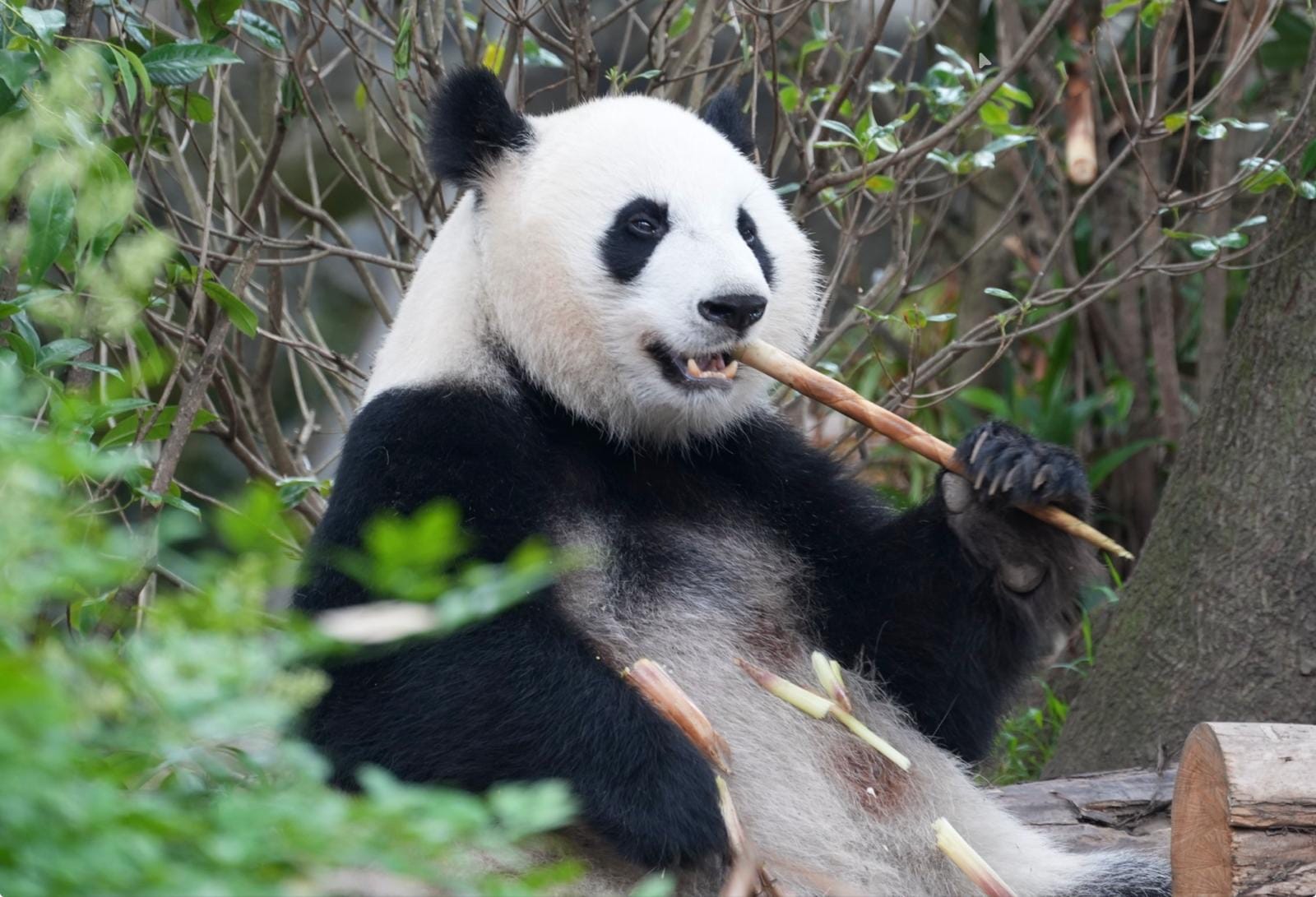
The giant panda is an unlikely ambassador for a city, but Chengdu wears the title proudly. As home to more than 80% of the world’s wild giant pandas, this leafy Sichuan metropolis has earned its reputation as the Panda Capital of the World. Yet the moment you arrive, you sense that the pandas are just the beginning.
The city breathes differently from other Chinese urban giants. Here, life slows. Step into any of Chengdu’s traditional teahouses and you will find the same scene played out. Old men lost in games of mahjong, the clink of cups, the rise of steam above a pot of jasmine tea. Nobody appears to be in a hurry.
Still, do not mistake that laid-back ease for a lack of ambition — especially in the kitchen. Chengdu is one of China’s true food capitals, and the proof hits you almost immediately. The air carries warmth and spice. And everywhere, the mala spice — that thrilling, tongue-numbing combination of heat and Sichuan pepper — underpins almost everything.
Wander further, and the city reveals its artistic depth. Opera troupes perform in intimate venues lit by lantern-light. Ancient temples nestle behind stone gates, breathing incense into narrow lanes. And at Du Fu’s Thatched Cottage, the historic home of China’s most beloved poet, beautifully kept gardens offer a quiet, contemplative retreat. Few cities can offer quite so many reasons to visit.
What to see and do
Chengdu Research Base of Giant Panda Breeding
Set just beyond the city, this sprawling three-square-kilometre reserve is the obvious first stop for anyone drawn to Chengdu’s most famous residents. Go in the morning, when the giant pandas are at their most active. Though even then, expect a lot of slow bamboo-chewing and leisurely lounging. Alongside the giant pandas, the base is also home to red pandas. And for the truly dedicated, the Wolong Shenshuping Giant Panda Sanctuary (四川卧龙中华大熊猫苑神树坪基地) operates as a semi-wild training school where pandas prepare for eventual release into the wild.
Mount Qingcheng • 青城山
Rising into mist across 36 dramatic peaks, Mount Qingcheng is one of the birthplaces of Taoism and one of China’s most sacred religious sites. Ancient monasteries and temples cling to its forested slopes, connected by stone pathways that wind through deep, fragrant woodland. As a UNESCO World Heritage Site, it also shares its slopes with the Dujiangyan Giant Panda Centre, making it a natural pairing with a visit to the Research Base.
Sichuan Opera
Sichuan Opera is unlike any performance you are likely to have seen before. At its heart is the legendary “face changing” technique. In this closely guarded art form performers swap vivid, ornate masks in a fraction of a second. So swiftly that audiences are left genuinely baffled. Combined with dramatic storytelling, fire breathing and vivid costuming, it is one of the most memorable cultural experiences Chengdu has to offer.
Leshan Giant Buddha • 乐山大佛
Easily reached by train or car, the Leshan Giant Buddha is one of the most awe-inspiring day trips from Chengdu. At 71 metres tall, this UNESCO World Heritage Site is the largest stone Buddha statue in the world. It has presided over the confluence of three rivers for over 1,200 years. There are two ways to experience it: hike the surrounding trails, where temples and ancient relics line the path. That said, queues at the viewing platform are common. Alternatively, take the boat to sidestep the crowds entirely and get the best photographs.
Eastern Suburb Memory • 东郊记忆
Built in the 1950s with Soviet assistance, the former Hongguang Electronics Tube Factory once represented the industrial ambitions of a new China. Today, the site buzzes with live music, art exhibitions, independent boutiques, and performance spaces. With its converted warehouses, chimneys and pipelines, this creative district manages to feel both nostalgic and forward-looking at once. The combination of raw industrial architecture and contemporary urban energy gives Eastern Suburb Memory a character that feels genuinely unlike anywhere else in the city.
Wuhou Shrine • 武侯祠
This complex honours the heroes of the Shu Han kingdom. Above all, it celebrates the revered ruler Liu Bei and his extraordinarily gifted prime minister Zhuge Liang. The current layout dates to 1672, and unusually, the shrine commemorates both a ruler and his subordinates within the same walls.
Jinli Ancient Street • 锦里古街
Conveniently close to Wuhou Memorial Temple, Jinli Street is one of Chengdu’s oldest and most characterful thoroughfares. First recorded during the Qin Dynasty as far back as 221 BCE, the street was thoughtfully restored in 2004 with the involvement of the Wuhou Temple. Today, this lively street is full of small shops selling embroidery, paintings and local Chengdu snacks. It is a great place to try a variety of local Chengdu street food on the way to the Wuhou Memorial Temple.
Du Fu Thatched Cottage • 杜甫草堂
To understand Du Fu is to understand something essential about Chinese culture. Often compared to Shakespeare in his significance, this celebrated poet, sometimes called the “poet historian”, captured the social and political upheavals of Tang Dynasty China with extraordinary clarity and feeling. The cottage itself is a thoughtful reconstruction rather than the original structure, but the beautifully kept gardens that surround it lend a sense of peace and reflection to the site.
Anshun Bridge • 安顺廊桥
Spanning the Jin River in elegant Qing Dynasty style, Anshun Bridge has earned its place as one of Chengdu’s most beloved landmarks. The original structure dates to 1746 and, remarkably, an even earlier version caught the attention of Marco Polo during his 13th-century travels through China. Though repeatedly rebuilt due to flooding, the current version completed in 2003. Visit at night, when the bridge lights up over the water, for the most memorable view.
Kuan Zhai Alleys • 宽窄巷子
Kuanzhai Alleys are, in fact, three distinct lanes: Kuan (Wide), Zhai (Narrow), and Jing (Well). Each alley has its own character, but all three share the same grey-tiled rooftops, carved wooden facades, and an abundance of excellent food. The alleys are undeniably busy, but the food makes the crowds worthwhile. From proper Sichuan street food to an irresistible parade of panda-themed ice creams, tarts, and snacks that are difficult to walk past.
Where to stay
Each neighbourhood in Chengdu offers a distinctly different experience, so choosing the right base makes a real difference to your trip. Most visitors gravitate towards Chunxi Road, the city’s most popular tourist area, with excellent food, shopping, and transport links all within easy reach. Within the Chunxi Road area, Taikoo Li brings a more upscale feel, with luxury hotels, great dining, and the city’s iconic IFS panda sculpture marking the skyline. Meanwhile, Tianfu Square sits at the geographical heart of the city, offering strong connections in every direction, though it can feel more commercial than charming. For something with more atmosphere, the Kuanzhai Alleys area offers centuries-old courtyard residences and traditional teahouses along Qing dynasty lanes.
Upper House (¥¥¥¥)
TAIKOO LI
Few hotels in Chengdu carry quite the sense of history that Upper House does. Built on former temple grounds, the restored Qing Dynasty building once served as lodgings for scholars and translators. With only 100 rooms and 42 serviced apartments centred around a heritage courtyard, it offers an intimacy that larger hotels simply cannot match. Recognised with a Michelin Key, a place in Tatler’s Best 100 Hotels in Asia Pacific, and ranked second in China by Condé Nast Traveller readers, Upper House has the credentials to back up its considerable charm.
Chuanjia Courtyard House (¥¥¥)
KUAN ZHAI ALLEYS
Tucked into Jing Alley, the quietest of the three Kuanzhai lanes, Chuanjia Courtyard House sits at the heart of one of Chengdu’s most characterful neighbourhoods. Yet, somehow it feels removed from its bustle. The property itself is a traditional Chinese garden-style space with lattice windows and an atmosphere that encourages you to slow down the moment you arrive. The food, shopping, and atmosphere of the Kuanzhai Alleys are right outside. Nearby attractions like People’s Park are easily reached, and transport links in the area are excellent. The lanes are car-free, so staff meet guests at a nearby drop-off point — a small practicality that only adds to the sense of stepping into a quieter world. Transport links in the surrounding area, meanwhile, remain excellent.
Chengdu Heritage Hotel (¥¥)
CHUNXI ROAD
Housed in a carefully renovated late Qing Dynasty triple courtyard residence, Chengdu Heritage Hotel is one of the most architecturally distinctive places to stay in the city. The original layout remains beautifully intact, and the design strikes a thoughtful balance between rustic, natural materials and modern comfort. The result is a space that feels both antique and alive. Rustic natural materials sit alongside thoughtful modern additions, and the overall atmosphere is warm and distinctive rather than museum-like. Centrally located and undeniably photogenic, it’s an ideal base for those who want character as well as convenience.
CD Yuenchi (¥)
WENSHU MONASTERY
Known internationally as Chengdu Courtyard Hotel, though entirely unrelated to Courtyard by Marriott. CD Yuenchi is a charming historical property sitting in one of the city’s most atmospheric neighbourhoods. The hotel itself centres on a traditional Sichuan-style courtyard, filled with antique Chinese furniture and art pieces. Just outside, the area buzzes with great food, heritage streets, and Sichuan Opera nearby. Furthermore, Wenshu Monastery is practically on the doorstep. Most major sights are within easy walking distance, making it an exceptionally practical base. For the quality and location on offer, it represents outstanding value. But keep in mind that the immediate area is pedestrianised, so expect a short walk from the nearest taxi drop-off point.
Where to eat
Chengdu earned its UNESCO City of Gastronomy status in 2010, and the moment you eat here, you understand why. Sichuan cuisine stands as one of China’s Four Great Traditions, and its most defining characteristic is málà: the thrilling combination of chilli heat and the lip-numbing tingle of Sichuan peppercorn. Yet, the food goes far beyond heat alone. Garlic, smoke, sweetness, sourness, and deep savouriness all play their part, creating a cuisine of remarkable complexity and balance. The most iconic dishes — dan dan noodles, hotpot, kung pao chicken, and mapo tofu — have earned global recognition. But venture further, and rewards await: Liangfen cold jelly noodles, dumplings bathed in spicy sauce, skewers dipped in chilli oil, and rabbit head, a local delicacy that adventurous eaters should absolutely try.
Houtang Old Hot Pot • 吼堂老火锅 (¥¥)
CHUNXI ROAD
Hou Tang Hot Pot does not just serve food, it transports you to 1930s Chengdu. The decor is immersive and theatrical: decorative signs, mahjong tables, and staff dressed in Republican-era costume all combine to create something genuinely unlike a typical restaurant visit. Throughout the meal, performers weave between the tables delivering Sichuan face-changing performances and traditional tea pouring. The food, meanwhile, more than holds its own. The signature hand-cut beef is prepared in open view, and the broth comes in a range of spice levels to suit every tolerance. Order rice as it is the best defence against the heat.
Chen Mapo Tofu • 陈麻婆豆腐 (¥¥)
DUFU THATCHED COTTAGE
Founded in 1862 and widely regarded as the birthplace of mapo tofu, Chen Mapo Tofu is as close to a culinary pilgrimage as Chengdu gets. The restaurant has held China Time-Honoured Brand status since 1993 and earned a Michelin Bib Gourmand — an accolade it has maintained for many years. Unsurprisingly, the queues reflect that reputation, so expect to wait at least an hour. Once seated, order the mapo tofu without hesitation: large, fiery, and impeccably balanced. The menu stretches across a broad range of Sichuan classics, and the kung pao chicken deserves particular attention. Helpfully, QR code ordering at the table keeps things simple, even without a word of Mandarin.
Dongzi Kouzhang Lao’er Liangfen • 洞子口张老二凉粉 (¥)
WENSHU MONASTERY
Sitting directly opposite Wenshu Monastery, this small, no-frills restaurant has been drawing loyal crowds for over fifty years. A wait for a seat is almost guaranteed but the food is worth it. The signature dish is liangfen (白涼粉): cold jellied noodles made from mung bean, dressed in smoky, spiced oil and served at room temperature. If you have not tried cold noodles yet, this is the place to start. From there, order the sweet water noodles (甜水面) — another Chengdu classic, chewy and richly sauced. Pair both of these dishes with the guōkuí (卤肉锅魁), flatbreads that are crispy on the outside and soft on the inside. Portions are deliberately small, so ordering several dishes is both easy and entirely encouraged. Place your order at the till and each dish arrives at the table when it’s ready.
Where to drink
No visit to Chengdu is complete without time spent in a teahouse. Fortunately, that is never difficult to arrange as they can be found everywhere. Head down a quiet backstreet, stroll through a busy park, or pause at a scenic spot, and a teahouse will almost certainly appear. Bamboo chairs, copper teapots, sunflower seeds on the table, and absolutely no pressure to be anywhere else. These aren’t simply places to drink tea. They’re social hubs where friends gather, elders play mahjong, or the city’s beloved ear-cleaning service. The golden rule, however, is simple: slow down and take your time.
For the most iconic experience, head to Heming Tea House inside People’s Park. It’s a centuries-old open-air institution that captures everything the culture stands for. For something quieter, the teahouse inside Wenshu Monastery offers a genuinely tranquil alternative, set within the grounds of an ancient Buddhist temple where the pace drops even further. Both are essential, and together they show two very different sides of Chengdu’s most beloved daily ritual.
Beyond the pandas
On the surface, Chengdu is the panda city but wander a little further, and a much richer picture emerges. Ancient temples sit quietly between modern streets. Teahouses fill up every afternoon without fail. Opera stages flicker with colour and drama. And the food is endlessly varied which gives you a new reason to be excited at every meal.
What you take away, ultimately, is less about any single sight and more about a feeling. Chengdu knows how to live well, and it has known for a very long time. Come for the pandas by all means. Then stay for everything else.
