
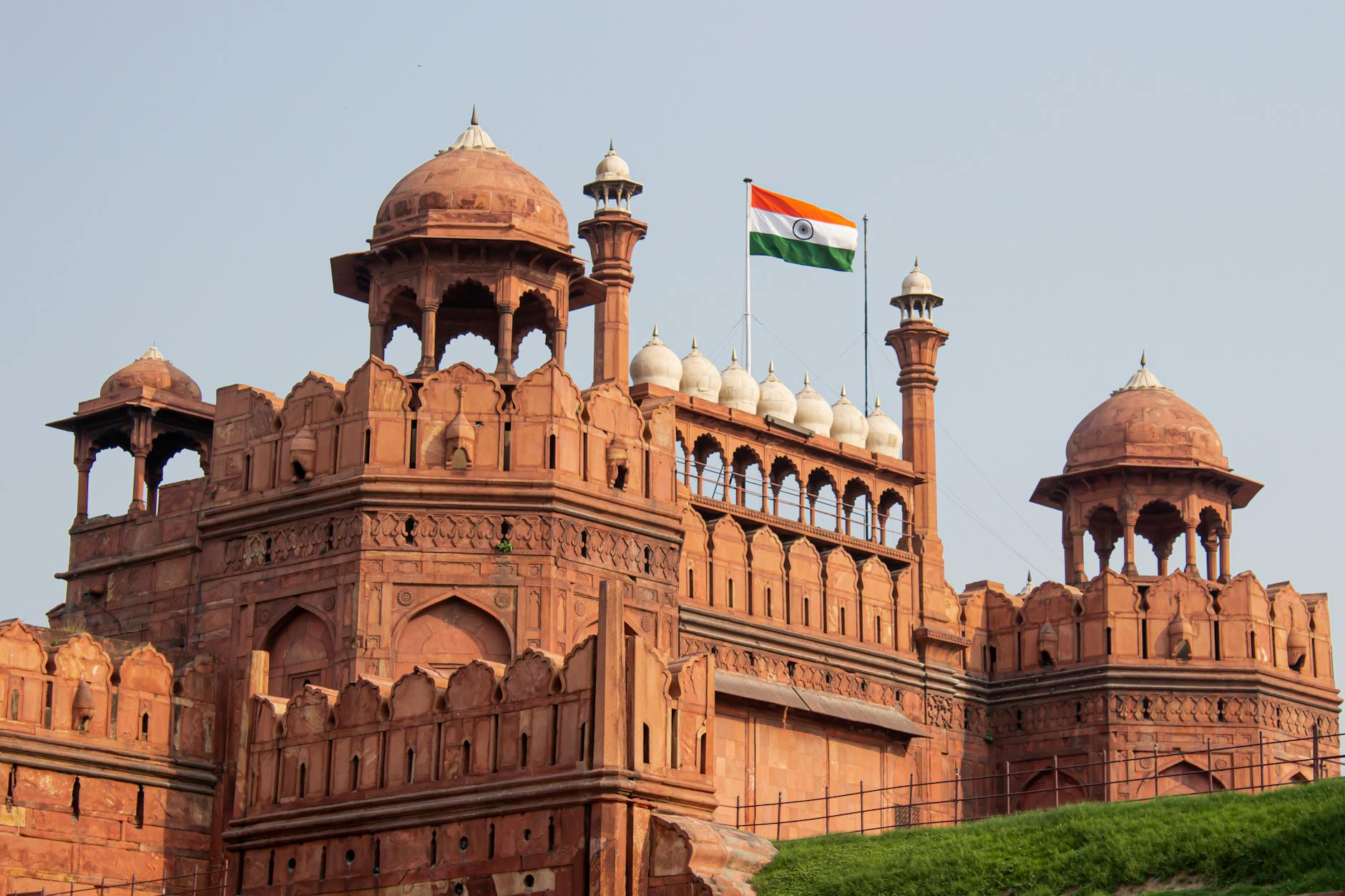
As the capital of India, Delhi is not only politically significant, it is also historically layered from the many empires that have come and gone. Yet beyond its historical sites, modern icons like the Lotus Temple and Lodhi Art District have emerged. From the Red Fort to India Gate, here are the best things to see and do in Delhi.
India Gate
India Gate is a war memorial in the heart of New Delhi, designed by British architect Edwin Lutyens and completed in 1931. It honours more than 70,000 Indian soldiers of the British Indian Army who died in World War I and the Third Anglo-Afghan War. It stands 42 metres above the lush lawns and boulevards of central Delhi.
Humayun’s Tomb
Built in 1570, this grand Mughal mausoleum was commissioned by Empress Bega Begum in memory of Emperor Humayun. Designed in a Persian-influenced style, the red sandstone and white marble structure sits within a formal charbagh garden with a geometrically planned layout divided by water channels. It is recognised as a UNESCO World Heritage Site and is considered a precursor to the Taj Mahal.


The Red Fort
Mughal Emperor Shah Jahan commissioned The Red Fort in the mid-17th century. This vast red sandstone fortress served as the Mughal rulers’ main residence for nearly 200 years, until 1857. The complex features palaces, audience halls and gardens with defensive walls stretching over two kilometers. Today, the UNESCO-listed monument stands as one of Delhi’s most significant historical landmarks.
Lotus Temple
Shaped like a blooming lotus, the Bahá’í House of Worship in Delhi was completed in 1986 and designed by Iranian-Canadian architect Fariborz Sahba. The structure consists of 27 white marble petal shells arranged in clusters to form nine sides and entrances. Open to people of all religions, it serves as a place for silent prayer and reflection.

Qutub Minar
Rising 73 metres above southern Delhi, construction on this red sandstone minaret and victory tower began in 1199 by Qutb-ud-din Aibak. It was later expanded by his successors in the Delhi Sultanate and is an early example of Indo-Islamic architecture. As India’s tallest tower, its five tapering storeys are separated by balconies and decorated with carved calligraphy. It stands within an extensive UNESCO World Heritage site that houses the Quwwat-ul-Islam Mosque, gateways, courtyards and other important monuments from Delhi’s early Islamic history.
Lodhi Garden
Spread across more than 90 acres in central Delhi, this historic public park combines landscaped gardens with 15th-century tombs from the Sayyid and Lodhi dynasties. The grounds include monuments such as Mohammed Shah’s Tomb, Sikandar Lodi’s Tomb and the Bara Gumbad Mosque. Lodhi Garden provides a peaceful oasis that contrasts with the intensity of surrounding Delhi.
Connaught Place
Dating back to the British-era development of New Delhi, this circular shopping and business district features Georgian-style colonnaded buildings arranged in two main rings. The arcaded corridors host a wide range of shops, restaurants and cafés that surround a central green space.
Lodhi Art District
In 2015, Lodhi Colony was transformed into India’s first open-air public art district. Fifty artists from India and around the world painted murals on the walls of the last housing estate built by the British in the 1940s. The end result is a colourful display celebrating themes ranging from nature and mythology to gender equality and environmental awareness, with more murals added each year.

